
Alberta Health Card Application: AHCIP Eligibility and Documents

An Alberta health card application is a request to join the Alberta Health Care Insurance Plan, or AHCIP. Moving to the province does not sign you up by itself. First, check whether you qualify. Then prepare proof of who you are, where you live and your legal right to stay in Canada.
Is this your first request for coverage?
Start with the official AHCIP sign-up guide. New and returning residents who qualify need to register. However, if you already have coverage and only lost the card, use the replacement route instead.
Also, check the rules for each family member. Some children whose parents do not qualify use a separate form. Do not leave a child out solely because a parent's own claim was refused. Read the child-specific rules before deciding what to send.
What must the records show?
AHCIP needs proof in three areas: Alberta residence, identity and legal entitlement to remain in Canada. These are separate facts. A single card may not answer all three questions.
 Request Your Medical Records in Ontario: Access, Fees and Corrections
- Residence proof shows that you live in Alberta.
- Identity proof shows who you are.
- Status proof shows your legal right to remain in Canada.
For example, a current lease can help show where you live. A passport can help prove identity. A work permit may help with the status check. However, the province's accepted record list decides which proof fits each task.
Next, put the records beside the form. Match each one to the fact it supports. This is more useful than sending several unrelated cards and hoping one will do. Check whether the front and back are both needed.
How do you complete the form?
Use the names and dates in your official records. Also, check the home and mailing addresses. If the card must go to a different address, follow the form's instructions rather than squeezing both addresses into one line.
For a family request, review each person's status and arrival details. A shared surname does not mean the same facts apply to everyone. If a name differs, keep the record that explains the link instead of editing the source document.
 Unlocking Canada’s Healthcare: How to Get Your Provincial Health Card Fast
However, do not guess a status category to get past a question. Ask AHCIP which rules apply if your records do not fit the listed examples. A submitted form is not proof that coverage has been granted.
Where do you take the request?
The guide offers a registry agent route. Take the completed form and original supporting records as directed. Check that the registry you plan to visit provides AHCIP service.
There is no charge for this registry sign-up service. Therefore, a fee listed for a different registry task should not be assumed to cover a health card request. Ask what a quoted charge is for before paying.
Also, keep a copy of your completed form and any receipt or reference. If a record is missing, note exactly what the office needs. Do not keep sending the same incomplete set without addressing the missing fact.
 Accessing Mental Health Support in Canada: A Guide to Therapy and Counseling Services
When does your coverage start?
The AHCIP coverage page explains that the office must review the form and proof before deciding whether you qualify. Use its decision for the coverage status and effective date. The day you first opened the form is not necessarily the start date.
Also, a provincial health plan does not cover every health cost. Ask about the service you need and keep any separate insurance in mind during a move. Do not treat the arrival of a card as proof that every drug or private treatment is insured.
What do you check afterwards?
Finally, check the name and details on the card against your request. Keep the approval and any correction notes. Alberta says to show the personal health card with photo ID when accessing services.
Use AHCIP's update route for later changes to address, status or family details. A new permit or a move is not a reason to start an unrelated first request.
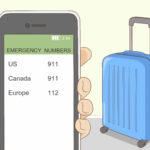 What to Do in a Medical Emergency: A Guide to Canada's 911 System

Related content