
CRA My Account Locked? How to Recover Access Safely
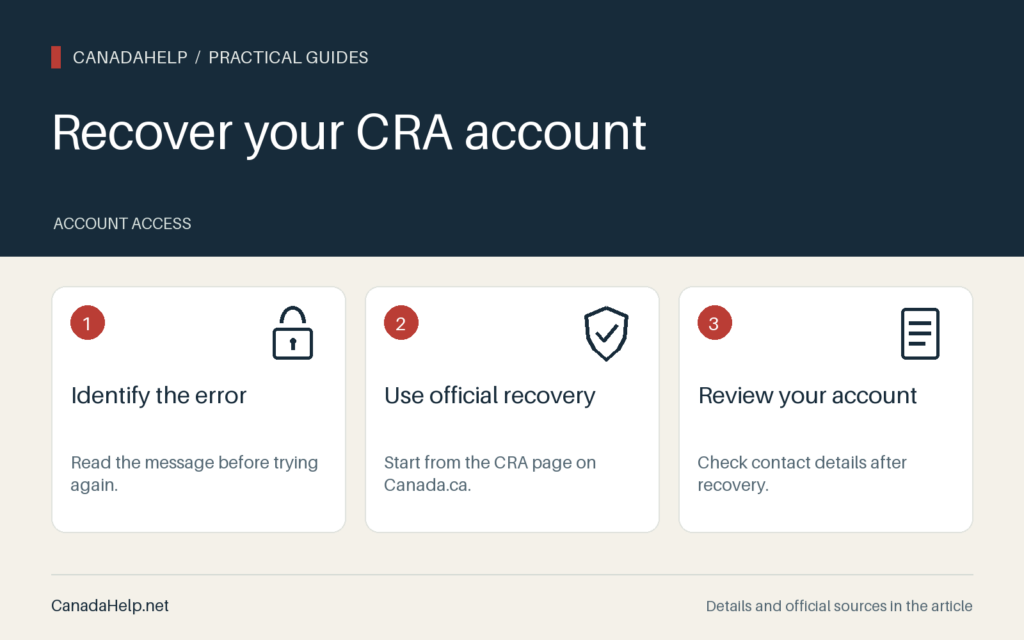
If your CRA My Account is locked, stop guessing passwords and start with the official Canada Revenue Agency sign-in page. The right recovery route depends on whether you forgot a credential, lost access to your authentication method or received a message that your account is locked. A website offering paid “instant unlocking” cannot replace the CRA’s identity checks.
Identify the problem before trying again
Write down the error message, the approximate time it appeared and the sign-in method you used. Keep this note private. Do not include your password, security answers or one-time authentication code in a screenshot you send to someone for help.
The CRA explains that repeated incorrect attempts involving credentials, authentication codes, security questions, a security code or document verification can trigger a lock. Its locked-account guidance distinguishes temporary MFA lockouts from situations requiring further recovery. Follow the message instead of assuming every lock requires a telephone call.
 Decoding Your Canadian Pay Stub: A Line-by-Line Explanation of Deductions
Start from the official sign-in page
- Open the CRA account sign-in page on Canada.ca yourself.
- Choose the method associated with your account: CRA credentials or an available partner option.
- If you forgot a user ID or password, use the recovery instructions associated with that method. Banking credentials used through a Sign-In Partner are managed by that financial institution.
- If the message explicitly says the account is locked, follow the CRA’s locked-account instructions rather than continuing to test passwords.
Check the address bar before entering information. A government logo, a padlock icon or a high position in search results does not establish that a site is operated by the CRA.
When the account really is locked
The CRA lists two recovery routes: going through registration again or contacting the agency to unlock the account. Which is practical for you depends on the message and whether you can complete identity verification. A new registration is not a guarantee that a security-related restriction will disappear.
If you need an agent, use the CRA contact directory and select help with your CRA account. Telephone numbers and operating hours can change, so use the current official listing instead of a number sent in an unsolicited message.
 Filing Your First Canadian Tax Return: A Simplified Guide for Dummies
Prepare for a support call
Have your identification and recent tax information available in a private place. The official contact instructions explain the identity checks for your service. A useful call note contains the error message and the recovery steps you already attempted; it should not contain passwords.
If you changed your phone, explain that you cannot receive the authentication code. If you suspect someone else accessed your account, say so at the start of the conversation. Ordinary password recovery and a suspected security incident may require different handling.
Keep urgent tax tasks separate from account recovery
Make a second list of anything time-sensitive, such as a document request or a filing task. Ask the CRA which official alternative applies while online access is unavailable. Do not assume that being locked out changes a tax deadline, or that a third-party unlock service can submit documents safely for you.
 Are Your Moving Expenses to Canada Tax Deductible? A Definitive Answer
Frequently asked questions
Should I keep trying passwords?
No. Repeated guesses can make troubleshooting harder. Use the official recovery route for the error you received.
Keep codes and sign-in credentials private. A person who explains the recovery process does not need to sign in as you.
How can I reduce future lockouts?
Use a unique password, store it securely and review the CRA’s instructions for maintaining your authentication settings. Once access returns, check your contact information and report changes you do not recognize.
 The GST/HST Credit: Are You Missing Out on This Free Government Money?
Related content